The pest control operators winning in 2026 are not the ones with the cheapest trucks or the loudest radio ads. They are the ones who built the right pest company technology stack.
Think about your last full week of work. How many hours did your office spend rebuilding routes after a cancellation? How many service tickets got typed up twice? How many customers called in wondering where their technician was, or when their next visit would happen? Every one of those moments is a small tax on your margin. Added up over a season, they are the difference between a business that grows and a business that grinds.
The top pest control companies in the country have figured out how to plug those leaks. Three technologies do most of the work: routing software, a pest-specific CRM, and a mobile field app for technicians. Here is how the stack fits together, and why SpringGreen’s 150+ franchise partners already have this running on day one.
Routing Software: The Single Biggest Efficiency Win
Routing is the easiest place to find money that is already in your business. Every extra mile your technician drives is fuel, time, and a delayed appointment for the next customer. Manual route building with paper maps or a shared spreadsheet cannot compete with what modern software does in seconds.
Enterprise pest control platforms report that strong route optimization helps field teams service 21% more jobs while cutting drive time by 30%. That is not a small improvement. That is a whole extra route per week, per technician, without hiring anyone new. Route optimization uses real-time traffic, technician availability, and customer location to automatically sequence each day’s stops.
For pest control specifically, this matters more than it does for almost any other service category. Routes are dense, recurring, and time-sensitive. A missed appointment for a termite renewal or a quarterly perimeter treatment can cost you a customer you have served for years. Software-driven routing keeps those appointments on schedule even when the day goes sideways.
A Pest-Specific CRM: The Customer Memory Your Business Needs
A CRM, or customer relationship management system, is the brain of a modern pest control business. The best pest control CRMs are purpose-built for this industry rather than adapted from a generic sales tool. Industry analysis highlights that the right CRM handles route density, aerial property measurement, mobile upsells from technician devices, and automated marketing triggers based on service history.
Why does this matter? Because a pest control business lives and dies by recurring revenue. Your CRM is what remembers that the Smith family on Oak Street prefers their quarterly visit on a Tuesday afternoon, that they have an outdoor cat, and that last June they reported ants near the kitchen. It is also what triggers the renewal reminder, the annual rate adjustment notice, and the mosquito upsell in May.
Without a real CRM, all that knowledge lives in one person’s head. That is fine until that person quits, retires, or simply has a bad day. With a CRM, the knowledge lives in the business, and the business keeps running no matter who picks up the phone.
Mobile Field Apps: Closing the Gap Between Office and Truck
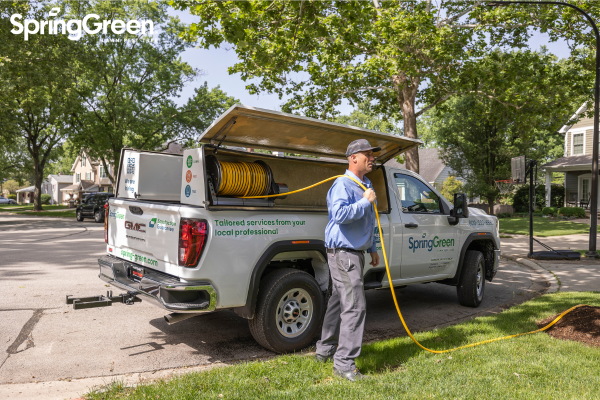
The third layer is the mobile field app that your technicians carry in the truck. This is where the efficiency dividends actually get paid out.
A strong mobile app gives technicians real-time access to schedules, customer history, treatment records, and chemical logs. They can capture digital signatures, collect payments on site, update job statuses, and upsell additional services with dynamic estimate packages. The office sees every update in real time, which means dispatchers can handle same-day changes without a single phone call back to the crew.
The data trail matters just as much as the speed. Regulatory compliance in the pest control industry demands detailed documentation of every chemical applied, every structure treated, and every communication with the customer. A paper-based business struggles to keep up. A mobile-first business produces clean records by default.
Why the Stack Is So Hard to Build Alone
Here is the problem facing independent pest control operators. Each of those three tools exists as a standalone product. Routing software, CRMs, and mobile field apps are all available from different vendors. The catch is making them talk to each other.
When your CRM does not sync with your routing software, your dispatcher is copying data manually. When your mobile app does not feed the CRM, your customer notes never make it back to the office. When none of them sync with your accounting system, your bookkeeper is reconciling by hand at the end of every month.
Building a truly integrated stack takes significant research, monthly subscription fees, technical integration work, and ongoing training as the software evolves. Many independent operators end up with one or two tools and a lot of duct tape between them. The efficiency gains get left on the table.
How SpringGreen Solves This for Franchise Partners
This is exactly where a proven franchise system earns its keep. SpringGreen has been in business since 1977, and across nearly five decades the brand has refined the technology stack that now supports 150+ franchise partners across the United States.
SpringGreen franchise partners do not have to pick, integrate, and maintain a pest control tech stack on their own. They plug into proprietary systems for property measurement, customer relationship management, route optimization, and mobile field work. These tools have been refined across thousands of territories and millions of service visits. The integration work is done. The training is done. The ongoing updates and improvements are handled centrally.
For a pest control operator who wants to compete at the top of the industry without losing months to vendor research and system integration, that accelerated start is the real value of franchising with SpringGreen.
The Bottom Line for Pest Company Operators
The pest control companies that will dominate their markets over the next five years are the ones running on integrated technology today. Routing software alone recaptures hours of wasted drive time each week. A pest-specific CRM protects the recurring revenue your business is built on. Mobile field apps close the gap between what happens on the job and what lives in the office. Stitched together, the stack is the single biggest efficiency lever available to a modern pest business operator.
Building that stack from scratch takes time, capital, and technical horsepower most independent operators do not have in surplus. Plugging into a proven system skips the learning curve entirely.
Ready to learn how SpringGreen’s technology and support equip franchise partners to run more efficient, more profitable pest control operations? Request your franchise information kit today. The SpringGreen team is ready to answer your questions and help you decide if the brand is right for the next chapter of your business.