Driving alignment, efficiency, and culture in a nationwide franchise network
By Brianna Bohn
Section I: Turning Growth Into Momentum With a PMO
Since 1977, Spring-Green Enterprises has provided high-quality lawn, pest, and tree care recommendations tailored to customer needs. As local professionals, they have an honest, simple approach: listen to the customer and care for their home like it’s their own. As a result of its customer-centric core values, Spring-Green has built a strong reputation nationwide. However, with expansion comes growing pains.
“In smaller organizations, everybody’s roles and tasks are implied. But as you start to grow, it’s harder to distinguish those roles and deliverables, especially for newer people coming in. As a result, tasks remain incomplete – not because people don’t want to do them but because there isn’t clear communication or structure,” explained Spring-Green Senior Director of Project Management Nerissa Bonet.
A Project Management Office (PMO) offers centralized oversight and improved organization to address these challenges. Yet many companies underestimate the value of PMOs – a misconception linked to 67% higher project failure rates, according to the Project Management Institute’s 2020 Pulse of the Profession® report. Organizations of all sizes – including those in the franchise space – are often hesitant to adopt PMOs due to a limited understanding of how they support business strategy and improve efficiency. Additionally, concerns about cultural and operational changes can lead to businesses delaying or reprioritizing the development of a PMO.
Efficiently run PMOs, however, result in improved productivity, higher customer satisfaction, and increased cost savings, according to The State of the Project Management Office, published by PM Solutions.
In 2014, Spring-Green took its first step into the project management world when it onboarded its first project manager. Since then, the PMO has developed and implemented project processes, best practices and organizational standards empowering individuals and resulting in greater efficiency and success.
CEO Ted Hofer commented on the PMO’s impact on Spring-Green Enterprises. “The introduction of the PMO along with our adoption of EOS/Traction has allowed us to break down our large initiatives into smaller components, track our progress regularly, and re-align the team when necessary. The end result has been a higher achievement of our strategic goals and on the expected timeline,” he said.
As a result of this increased focus and structure, the company has accomplished several notable milestones, including the addition of the Pet Butler® brand to its portfolio, strengthening its market presence as a unified organization.
Section II: Laying the Groundwork: Spring-Green PMO’s Early Wins and Lasting Influence
In October 2014, Bonet identified areas of growth that Spring-Green Enterprises could tap into, and she developed the company’s first project management practices. Although seemingly simple, the foundational tasks – including establishing clear lines of communication, defining roles within the company, and outlining deliverables – paved the way for the success of bigger projects.
Like any new role within a company, the project manager sought to secure organizational support by demonstrating its value. Rather than push ahead prematurely, Bonet identified the company’s needs and readiness, listening to stakeholders’ input. In a few years’ time, as other projects were underway, the PMO was born, becoming an official department within the organization. Simultaneously, the executive team worked to demonstrate the PMO’s value.
President of Pet Butler LLC James Young, and former COO of Spring-Green Enterprises, explained, “We positioned the PMO not as a compliance function but as a strategic enabler. The question posed was: ‘How can Nerissa assist in making your job, processes, and communication more efficient?’” That reframing helped generate meaningful buy-in across the organization.
With growing support and a clearer understanding of the PMO’s role, Bonet began introducing key tools and processes. One of the first process standards was the deployment of Wrike – a project management tool – with a pilot group to build interest and address concerns before rollout. Shortly thereafter, interest in the tool spread across departments, leading to greater adoption. The PMO’s ongoing support and education of the tool also has helped adoption.
In particular, Spring-Green Enterprises’ Wrike account manager reports an 80% usage rate, which is one of the highest among all clients that use the tool, including Fortune 500 companies.
These early efforts helped establish the PMO as a trusted partner that improves workflow, communication, and cross-departmental success.
The following section highlights some of the other projects Spring-Green’s PMO has developed and implemented. It also includes broader impacts.
National Training Conference
Date implemented: 1995; In 2014, processes were updated and the conference became annual instead of biannual
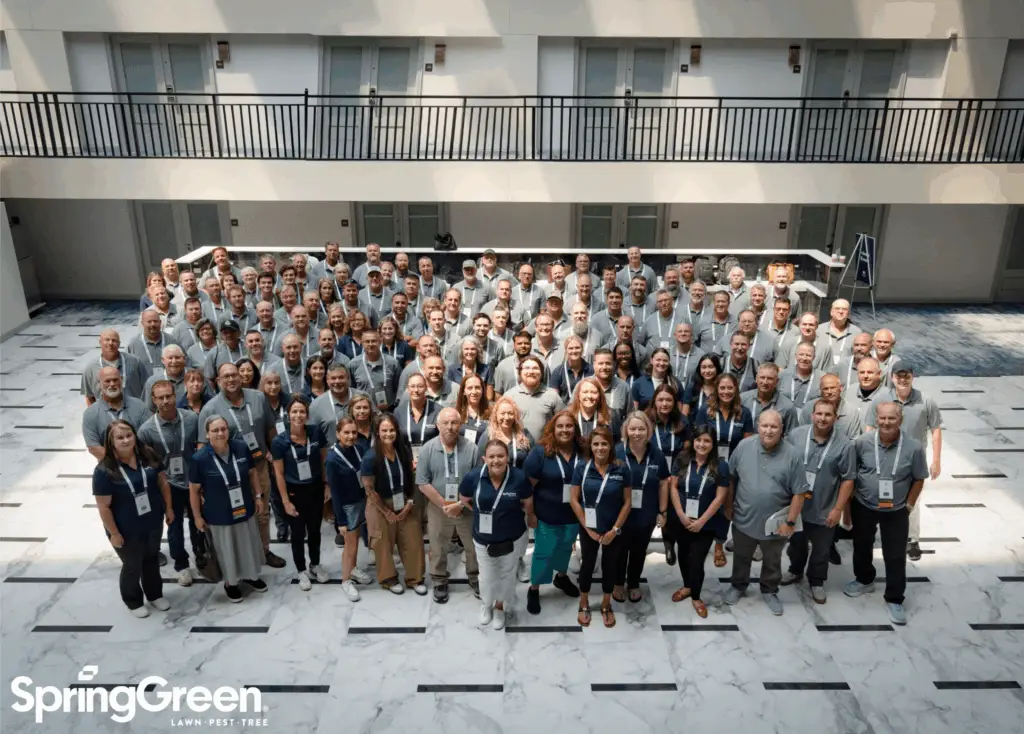
Description The National Training Conference is an annual multi-day event hosted by Spring-Green Enterprises. It equips franchise owners from all over the country with actionable strategies and insights that drive business growth.
Ten months prior to the conference, the PMO completes several critical tasks to prepare, including venue selection, site management, coordinating keynote speakers, organizing a silent auction, managing a vendor trade show, and planning the award ceremony.
PMO’s impact: When Bonet assumed responsibility for the planning and execution of the National Training Conference, it was a solo project organized with just a few spreadsheets. After reviewing the processes, Bonet identified nearly 500 individual tasks. With the implementation of Wrike, the conference was streamlined further.
She has since assembled a core team of five members from various departments across the organization, and they work in sync like a well-oiled machine. Bonet also developed detailed documentation for the processes, enabling the training of additional staff to become core members, as the event grows.
Under her leadership, the conference shifted from a biannual to annual event, shortly after the acquisition of the second brand, Pet Butler, boosting engagement and visibility. Bonet successfully integrated the brand into the conference, creating a unified and cohesive experience.
This process kicks off in Q4 of the year prior to the conference, allowing time for strategic planning.
Impact on stakeholders: Through high-impact training sessions, access to the support center team and vendors, and networking opportunities with other franchisees, attendees gain tools that support sustainable success and increase scalability. Centered around the theme “Building for Profit,” the event fosters collaboration and builds community.
Looking forward: As the National Training Conference continues to expand, the focus is on growing internal leadership with the planning process. The goal is to bring new individuals into the core team and gradually transition key roles to other members. This approach not only ensures sustainability as the event grows, but it also helps team members build valuable leadership skills and take on greater ownership of future conferences.
Marketing ARPE (Analysis, Recommendation, Playbook, Enrollment Kit) Process
Date implemented: June 2023; ongoing every year, starting in Q1 and ending 10 months into Q4
Description: The Marketing ARPE Process is an annualprocess that spans 10 months and involves five departments, including three shared services that support the marketing efforts of both brands.
PMO’s impact: Due to the large number of departments involved in this initiative, the PMO plays a critical role in overseeing the marketing process, ensuring organizational alignment and the timely execution of 600 tasks required to complete the process.
Impact on stakeholders: As a result, franchisees’ marketing plan components are built out in the company’s internal systems, ready for execution in the following year.
Looking forward: As the marketing process continues to become more streamlined, it helps franchise owners meet their goals and contributes to the organization’s overall growth. It also generates more accurate data, allowing franchise owners to become more profitable and helping the system grow more efficiently.
PMO Peer Group
Date implemented: Started in 2017, refined and restarted in April 2023 after the COVID-19 pandemic
Description: The PMO peer group promotes and influences project management standards, processes, and best practices across the organization.
PMO’s impact: Because of Spring-Green Enterprises’ continued growth, the senior director of the project management office and the executive team identified a critical need for consistency in how departments meet, manage, and communicate internally.
Impact on stakeholders: The PMO Peer Group has far-reaching benefits across Spring-Green Enterprises. For peer group members, regular meetings foster professional development, build confidence and strengthen their ability to lead within their departments. Each department benefits from these peers who build connections and drive the adoption of standardized projects and best practices
This ripple effect contributes to greater alignment and efficiency throughout Spring-Green Enterprises, allowing more resources to be directed to supporting franchisees. As a result, with better training and project readiness, franchisees have more time to focus on what matters most – running a successful business.
“The monthly PMO Peer group has been exceptional,” said Young. “Nerissa has brought together a diverse group of people with varying backgrounds in project management and established a common purpose. She is undoubtedly a leader who values investing in others, and she raises the bar with her expectations and belief in everyone. We have individuals requesting to join the group. I cannot overstate the significance of this unrecognized effort that she voluntarily undertook.”
Looking forward: Moving forward, the PMO Peer Group strives to be the foundation for achieving organization-wide results through projects driven by standards and best practices.
Section III: Insights from Within: Stakeholder Feedback and Industry Comparison
Although this article highlights only a few of the projects led by the PMO, it demonstrates the PMO’s critical role in improving Spring-Green Enterprises’ efficiency and strengthening the organization’s ability to meet the demands of continued growth.
To gain a deeper understanding of the PMO’s impact, stakeholders across various levels of the organization were invited to share their insights. Their feedback was analyzed alongside findings from top-performing companies, revealing that Spring-Green’s PMO is aligned with many proven strategies that support operational excellence.
In particular, several members of the PMO Peer Group completed a survey reflecting on their monthly meetings and the broader company culture. Most respondents reported that communication, collaboration and teamwork are “highly valued” by the organization, rated on a scale of “highly valued,” “somewhat valued,” and “undervalued.”
One PMO Peer Group member shared that round-table discussions and the supportive group environment have helped them feel more aligned within the larger organization.
Another respondent noted the value of communication and collaboration for project success: “We have many team members running projects – whether they are PMs or not. The more we are aligned, the more we present a united front in project rollout, especially in how and when we present to franchise owners. If we are united, they can expect a standard process for rolling out initiatives, which makes [franchise owners] more comfortable when we are starting something new.”
These internal insights reinforce the PMO’s focus on developing power skills – such as communication, teamwork, problem-solving, and empathy – which build strong leaders and more effective teams. This aligns with findings from The Project Management Institute’s Pulse of the Profession 2023 report, which highlights the impact of power skills on project success.
According to the report, companies that prioritize power skills:
- See 72% of their projects meet business goals
- Experience 28% less scope creep
- Incur only 17% budget loss when a project fails
Additionally, they are approximately:
- 3x more likely to report high benefits realization management maturity
- 2x more likely to report high project management maturity
- 3x more likely to report high organizational agility
Spring-Green’s investment in power skills through the PMO Peer Group creates a ripple effect, supporting individual growth while contributing to broader strategic outcomes across the organization. This impact is visible not only in day-to-day project execution but also in the cultural shifts noted throughout the company.
Hofer explained that Spring-Green has seen “an increase in communication, cooperation and collaboration across departments,” and greater trust and faith have been developed across department lines, as a result. While culture was once built though shared office space, Hofer noted that the PMO has played a critical role in sustaining and evolving that culture. “It has been impressive that the PMO has influenced a cultural change at the same time that the work environment of our teams has become more virtual. We’ve been able to maintain our culture through this change because of the confidence our teams have in each other,” he said.
Young also shared his thoughts about the PMO’s impact. “Through regular progress reporting, stakeholder communication protocols, and structured project reviews, the PMO has normalized cross-departmental collaboration and elevated the importance of data-driven decision-making,” he said. “Its influence is especially visible in how teams now approach planning – with clearer scopes, defined deliverables, and shared ownership of outcomes. This has helped shift the culture from reactive to proactive, with a stronger emphasis on execution, excellence, and shared success.”
With its continued focus on leadership development and cross-departmental collaboration, the PMO is well-positioned to support Spring-Green’s next chapter of innovation and sustainable growth.
Section IV: The Future of the Company and the Project Management Office
The organization’s experience shows that the PMO thrives with strong executive support, an investment in resources, and a focus on professional development.
Reflecting on Spring-Green’s growth, Hofer emphasized that companies interested in launching a PMO must remain committed and provide support, otherwise improvements will be limited. “Our PMO flourished when our leadership showed its commitment to empowering them to have the necessary influence to keep the team on track,” he said. “We’ve allocated resources and encouraged our PMO team members to build their knowledge by meeting regularly as a team, engaging a project management consultant, and pursuing their PMP accreditation, and we’ve seen improvement in project completion across all our departments as a result.”
As impact has grown, the PMO has evolved from a support role to a strategic partner, contributing to overall structure and accountability across the organization. What began as a single project manager (PM) working alongside the COO, has grown into a network of PMs in key areas – though one department still needs a PM. The PMO remains dedicated to strengthening these roles and improving current projects.
One of those projects, the PMO Peer Group, continues to grow and acts as a catalyst to mature the organization’s project management practices and methodologies. Also, Bonet continues to work closely with the company’s executives, integrating additional teams into the project management community and supporting the development and adoption of new tools and processes. As a result, Spring-Green has been able to add capacity without adding head count, which has enabled significant business growth.
Most recently, Spring-Green has begun exploring the strategic use of AI. “We’ve seen gains from the use of AI internally in our meetings,” explained Hofer, “but the growth of AI throughout the rest of our business will mean more complex, large initiatives for our company to undertake. AI is influencing all areas of our business – including our customer experience – and for us to successfully leverage it will require coordination across all our departments and the PMO.”
Section V: Key Takeaways
When developed and supported properly, a PMO isn’t just about managing timelines – it cultivates a culture of collaboration, builds consistency across departments and brands, and empowers employees and franchisees alike. Ultimately, PMO success comes from intentional, purposeful integration rather than enforcement.
“At Spring-Green, the PMO’s success is attributed to its adaptability, support for departmental leaders, and ability to drive enterprise-wide alignment without becoming overly bureaucratic,” Young said.
With executive-level support, the Spring-Green PMO has introduced structured processes and valuable tools, impacting efficiency and success.
“The quality and value of the work from our department heads, in particular, have increased significantly,” Hofer said. “The PMO and the structure they provide helps our leaders stay on top of their department’s priorities and ensure they are completed on time. With many of our largest initiatives relying on multiple departments, the PMO processes provide the confidence that each department will successfully carry their portion of the load.”
Bonet and her team have developed an approach that is especially powerful in the franchise space where well-defined procedures and cross-departmental consistency are essential.
With strong leadership and a clear purpose, any franchise can benefit from the structure and long-term value a PMO offers.
Works Cited
Project Management Institute. Power Skills: Redefining Project Success. Pulse of the Profession® 2023, Nov. 2022, www.pmi.org/learning/thought-leadership/power-skills-redefining-project-success.
Project Management Institute. Forging a Future-Focused Culture. www.pmi.org/learning/library/forging-future-focused-culture-11908.
PM Solutions. Project Management 2022 Research Report and Data. 2022, www.pmsolutions.com/reports/Project_Management_2022_Research_Report_and_Data.pdf.